

Given its influence today, you’d be forgiven for thinking that the book was an instant success. The New Jim Crow struggled for attention when it was released in 2010 after the election of the country’s first Black president.
But as the Obama years — shaped by extrajudicial kill lists, growing inequality, handouts to CEOs and corporations, prosecutions of whistleblowers — gave way to disappointment, legal scholar Michelle Alexander found a more receptive audience. The book argued that the U.S. criminal justice system, far from colorblind, continues to be a tool of racial oppression decades after major civil rights legislation and thanks to bipartisan efforts.
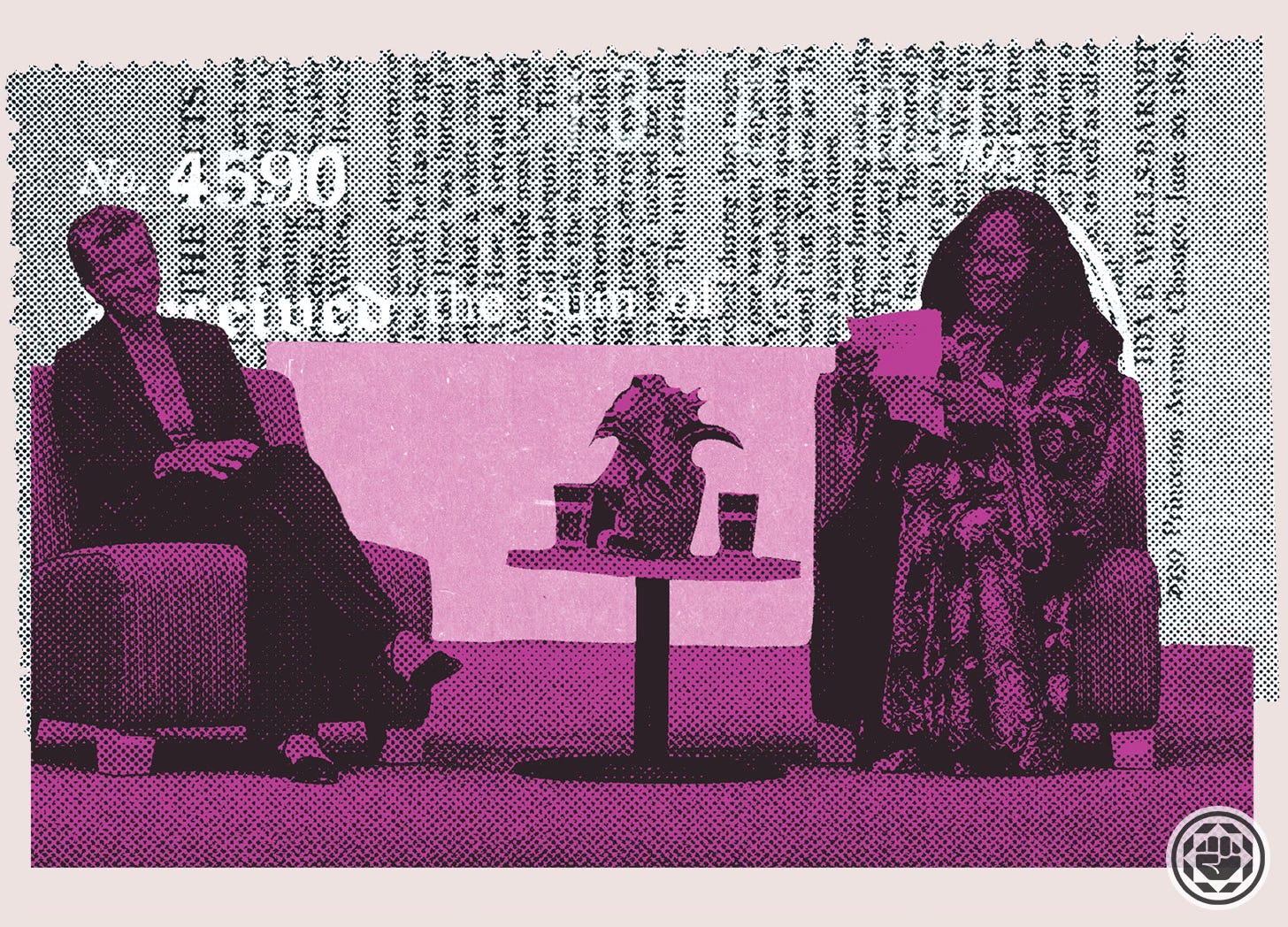
Alexander spoke to Pillars of the Community’s Director of Operations, Laila Aziz, on Sept. 6, 2025, at The Saville Theatre at San Diego City College and took questions from the audience. The following discussion, held during a celebration of the region’s public defenders, has been condensed for clarity and length.
In what ways do you believe the struggle for lawyers and community activists has changed since the publication of your book? And in what ways do you think it’s the same?
When I decided to write a new introduction to the book, for the 10th anniversary edition, I think the first line says something like, ‘Everything and nothing has changed.’ And I think that’s true. Everything and nothing has changed. The book had an impact because organizers and activists were willing to stand up when tanks rolled into the streets in Ferguson. The activism and the courage and the spirit of rebellion and the willingness to say, ‘No, we’re not taking this anymore,’ created a moment where people were actually willing to hear another narrative. And so in some ways I think everything has changed in terms of the willingness for people to open their minds to the reality that we have created something like a new caste system in the United States...There’s an awareness of this now, and there’s an awareness of the extent and depth and toxicity that exists in police departments and prosecutor’s offices because of the movement work and all of the political education that went along with it in recent decades.
Some of you may be familiar with Lani Guinier, who’s a Harvard law professor who wrote a book in which she argued that Black people are the miner’s canary of our democracy; how Black people are treated is a warning signal for the state of the democracy as a whole. I hope that people will begin to wake up to the reality that our entire democracy, such as it is — to a large extent, a stretch, even to claim it as a whole democracy — is under threat, not just by Donald Trump, not just by the rise of authoritarianism around the world, but it has been under threat as a result of the rise of mass incarceration. Now we find that people of all races, all ethnicities, all religions, are themselves in a position of threat because of our failure to extend democracy to all. I hope that we will reframe public defense as not just about individual defense or about the rights of the accused, but also about the defense of a vision of democracy that has not yet fully been born.
Today, we have all types of shows that valorize police and prosecutors, but essentially no programs that uplift the importance of public defenders. What does it say about a society that celebrates the people who fuel mass incarceration while dismissing community members and public defenders?
I do think it’s important to situate this moment partly within the context of race and the perpetual backlash against any efforts to dislodge the system of white supremacy that has reigned since our nation’s founding. But I think it’s also important to situate it within our capitalist system. Our capitalist system requires losers. It requires a perpetual underclass. It requires cheap, disciplined, fearful labor, and it requires the celebration of the rich and the powerful and the condemnation of the so-called losers. And we must blame losers for being at the bottom and not enjoying the success that otherwise would be available to them if they had only played by the rules. That is how our system is designed, and we associate shame and unworthiness with all those who dare to stand alongside them in solidarity.
That’s what public offense is. It is people choosing voluntarily to stand in solidarity with those who have been demonized, shamed, viewed and painted as unworthy, and so it’s no surprise that public defenders are among the least likely to be celebrated.
And yet, as I see it, if you look at any of our faith traditions, who are we expected to value? Who did Jesus decide to stand with? Who did Buddha decide to stand with? If we look at our faith traditions, over and over, we are told and we are taught that it is the immigrant. It is the poor.
And yet here we are in this nation that is now veering, if not already capitulated, to white Christian nationalism, celebrating the richest and the powerful and the most greedy billionaires as people who we should get life advice from. And so I think the fact that you as public defenders are not being celebrated can be worn as a badge of honor.
It may be a lonely way to go, but we have each other and it is the only way worth going. It is the only way of really saving all hope for humanity as climate change looms, as a threat of AI looms, to say, ‘No, no, no, we actually choose instead of greed, instead of the relentless love for attention and notoriety and fame, what we choose instead is love. We choose humanity and even a spark of divinity that exists within us all.
The work we do to make carceral systems less harmful can be exhausting. We often see people become disgruntled and disenchanted. What words of advice do you have for public defenders who may feel overwhelmed by the enormity of forces against them, and how can we ensure that people with lived experience are leading the movement?
Just as the book started blowing up, and instead of just having a few people in the audience, suddenly there were hundreds of people coming, and suddenly people were paying attention. And it was at this moment when I really should have been so thrilled, but I fell into a deep depression. I had a sinking feeling that it looks like things are changing, but they aren’t really. I started hearing this voice in my head when I walked off stage that said, ‘It’s all sound and fury, signifying nothing.’ But I was invited to speak at Iowa School of Theology by a man named Vincent Harding, who was one of these people in the Civil Rights movement who never became famous but was incredibly influential. He said, ‘I appreciate all you’ve done to expose the system, but I think there’s a deeper message that you are struggling to articulate and perhaps even claim for yourself. I think the deeper message is what Jesus was trying to say when he said, “What you do to the least of these, my brethren, you do unto me.”’
I did not identify as a Christian then. I still do not, but I felt something really open up in me. And the advice he gave me is the advice I would give you in your moments of depression and exhaustion and despair, and feeling like nothing is ever really gonna change. The advice he gave me was to remember that there’s so much more at stake than any individual win or loss, that there’s a spiritual dimension to our struggles. Showing up for those who have been labeled as unworthy, the least of these, that is sacred work.
You are wading into a long river of resistance that long predated you and will continue on generations after you’re gone. And so, rather than imagining that you should evaluate your success or evaluate progress based on any one outcome of a court case or any snapshot in a moment in time, instead, evaluate whether you are able to show up with greater courage, honesty, and compassion, and whether you are capable of supporting others and doing the same... Do what makes you come alive, and recognize that the quest for status and wealth and success in its generic form rarely makes anyone come alive. Giving yourself over to something greater than yourself, a cause greater than yourself, being willing to take risks, and to be able to do work that allows you to be your most compassionate, authentic, courageous self.
I think it is absolutely essential that people who know the system best because they’ve lived it don’t just get trotted out to tell their stories, but are supported in leadership roles and building organizations. I think it’s important for us to see ourselves in partnership, to understand that all of our liberation is at stake and that we can’t get free without each other. And the idea that the experts have the answers and that we can formulate some recipe that will put everything to rest for good — no, no. This is something that has to be done collectively, done together. And we are going to have to trust that people who have been most harmed by the system may well have the most to contribute to the movement.