

This past month, my husband, Keshawn Price, was subjected to a pretextual traffic stop, with the stated reason being “window tint.” This incident reflects a broader pattern in our community, where minor or questionable violations are used as pretexts for stops that often escalate into unnecessary questioning, searches, intimidation, and racial discrimination, primarily targeting Black, Brown, and Latino drivers.
In this incident, Keshawn was followed for approximately five minutes before being pulled over in a plaza parking lot in front of a McDonald’s. Three police vehicles positioned themselves behind him. An officer approached, instructed him to roll down all his windows, and informed him that the stop was due to window tint.
It appeared the officer already knew who he was, likely by running his name through ALPR or a registration check. In our community, there are tremendous disparities in tint stops for Black and Latino drivers. Black drivers, such as my husband, are often targeted, and their traditional African American names appear to be identifiers used to justify stops. We have documented complaints from community members with names such as Keeshawn, Kwamane, and Lamar. Similarly, Latino drivers with surnames such as Gonzalez, Avalos, and Lopez are disproportionately stopped.
Pillars of the Community decided to analyze data from the state’s Racial Identity and Profiling Act (RIPA) to test whether these disparities could be verified quantitatively. One immediate challenge was that the police department intentionally makes the data difficult to use, with unique identifiers defined differently across datasets. Still, we were able to connect and analyze the data and the results were staggering.
Fifty percent of drivers stopped for window tint were Latino, and twenty-five percent were Black. By contrast, Hispanic/Latino residents make up only 34% of San Diego’s population, yet account for 50% of tint stops. Black residents represent just 6% of the population but make up 25% of tint stops. White residents account for 44% of San Diego’s population but only 16% of tint stops. In all, BIPOC drivers including Middle Eastern immigrants and Asian Pacific Islander community members make up 84% of all window tint stops.
A video of this stop shows my husband seated in his car as I stood nearby.
I informed the training officer on scene that I would be filing a complaint. He responded dismissively, stating he would “put the complaint in the shredder,” and then launched into a tirade about following “local, state, and federal laws.”
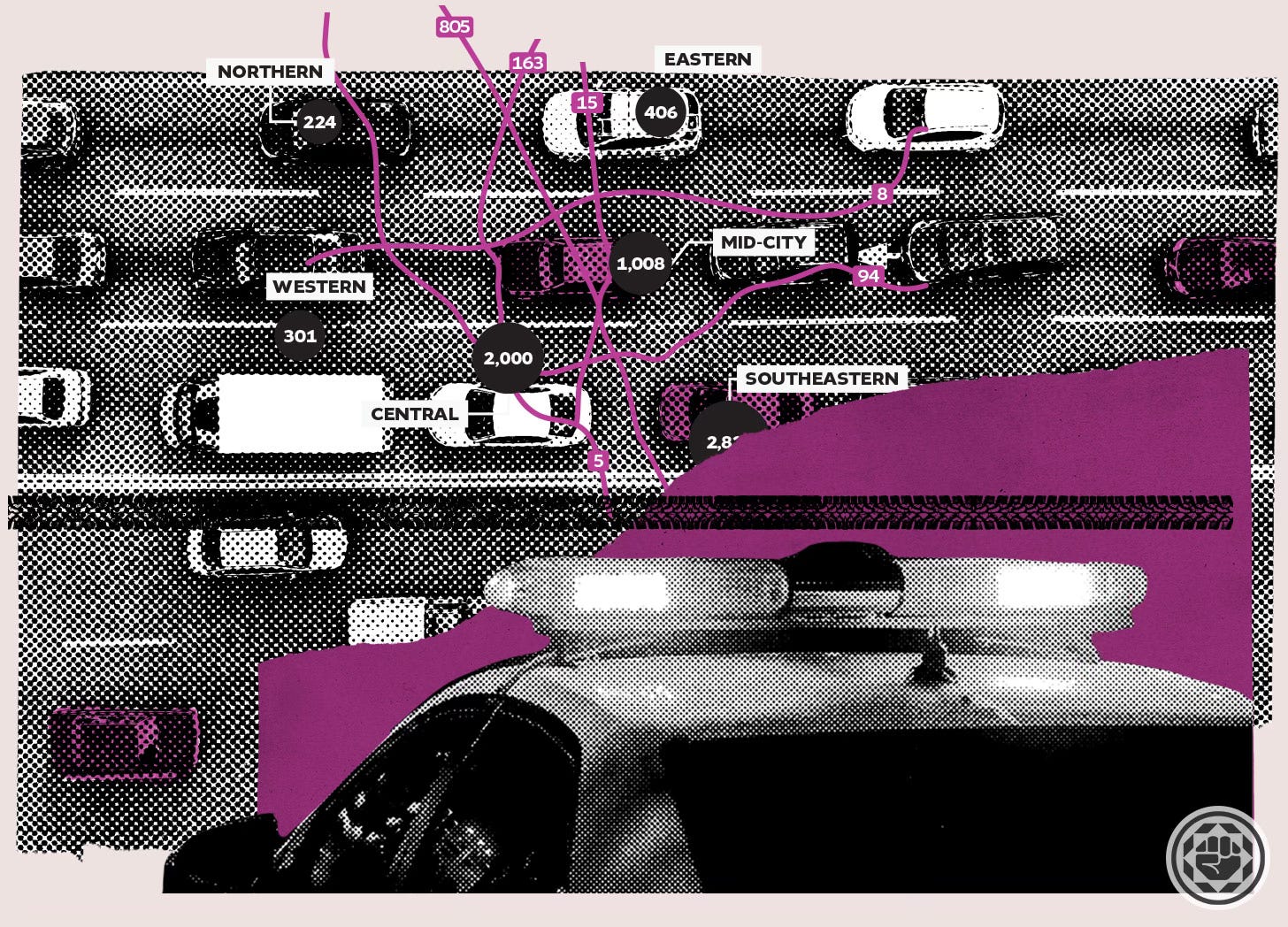
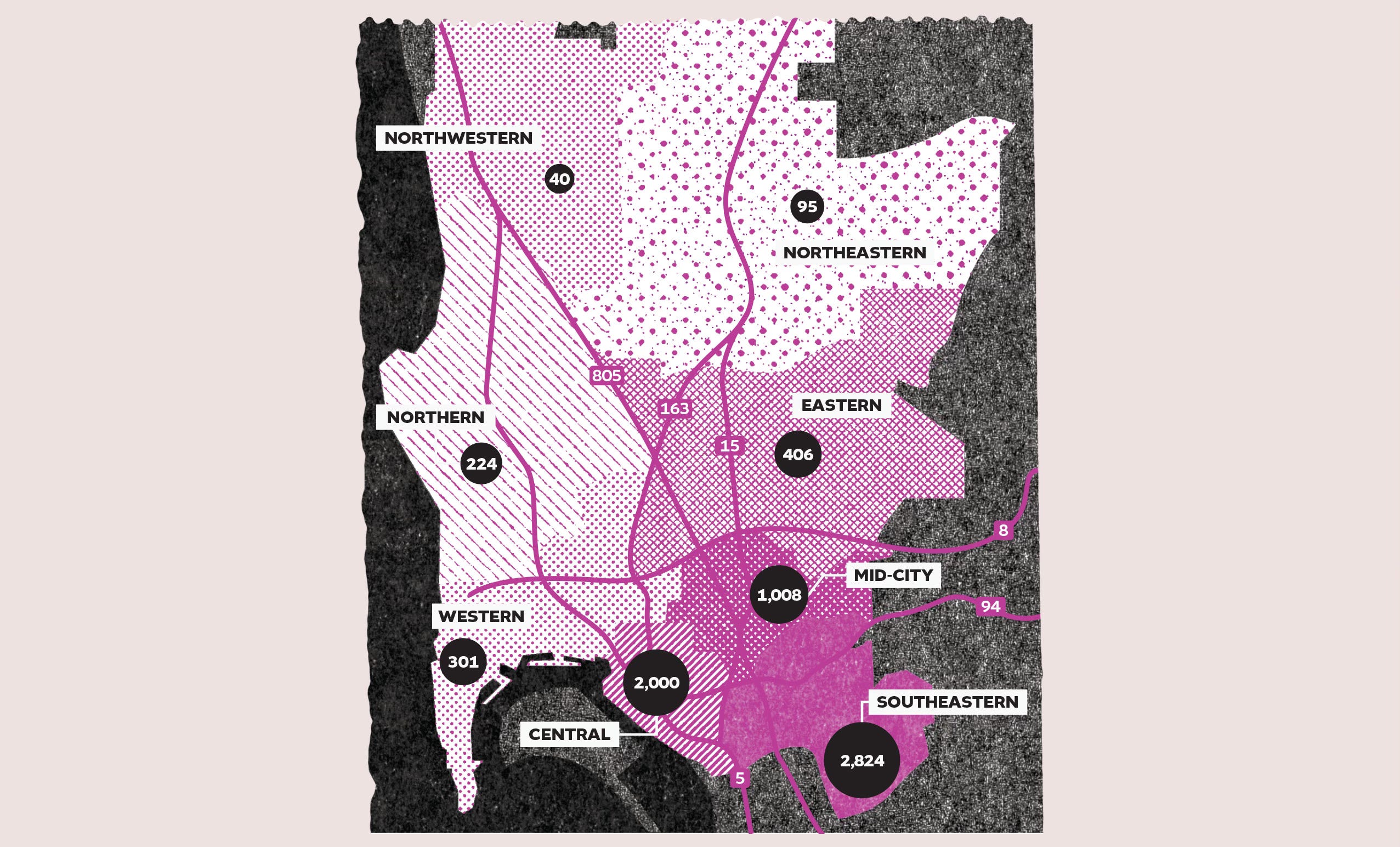
This led us to dig deeper. Using GeoJSON data, JavaScript, and HTML, we mapped stops by race and police division. What we found was shocking and reminiscent of historical systems of racial control, such as the Lantern Laws in the North, which required Black people and other people of color to carry lanterns at night if unaccompanied by a white person. These window tint stops also echo the discriminatory Black Codes and Mexican Codes. While window tint laws appear race-neutral, they are selectively enforced against Black and Brown drivers, creating stark racial disparities.
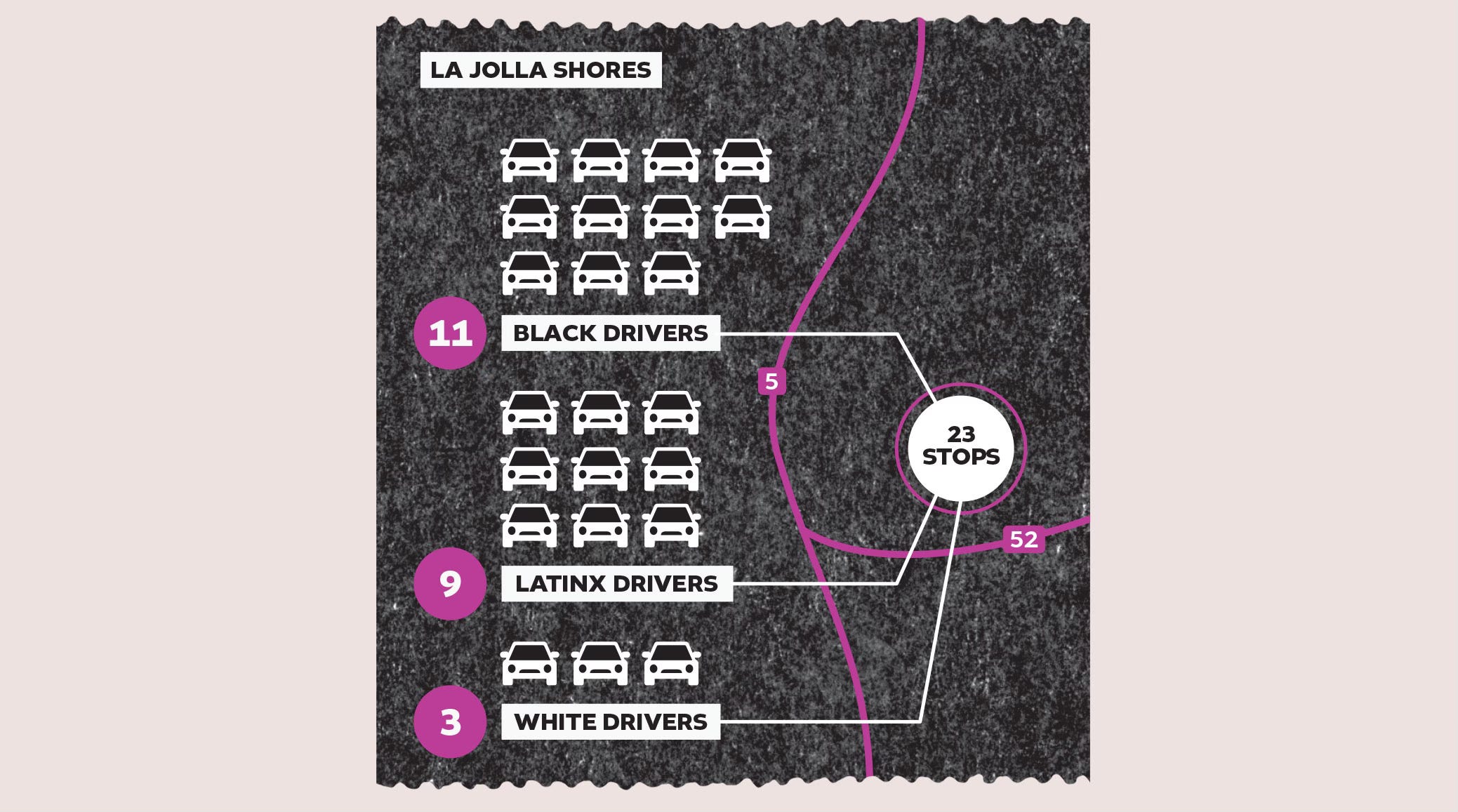
We also visited the local precinct and discovered that nearly every single police vehicle in the officer only parking lot had tinted windows. Even more alarming, citations of Black and Brown drivers for tint disproportionately occur in affluent beachside areas. Selective enforcement is being used to control access and mobility for communities of color. For example, in one cluster near Mission Beach, there were 11 stops of Black drivers, 9 stops of Latino drivers, and just 3 stops of white drivers for tint violations. This data makes clear that window tint enforcement is not about traffic safety but about systemic racial profiling and control.
Also, the communities we live in overall have the most stops. Southeast San Diego has the highest number of stops with 2,824 stops. Southeast San Diego has the highest concentration of Black people in the city and county of San Diego — 16% of residents are Black.
We have complaints pending for window tint for all these community members,who can be identified by having Latino surnames or traditional African American names. We charge that the San Diego Police Department is using surveillance and registration data to racially profile Black and Latino drivers for pretextual stops.