

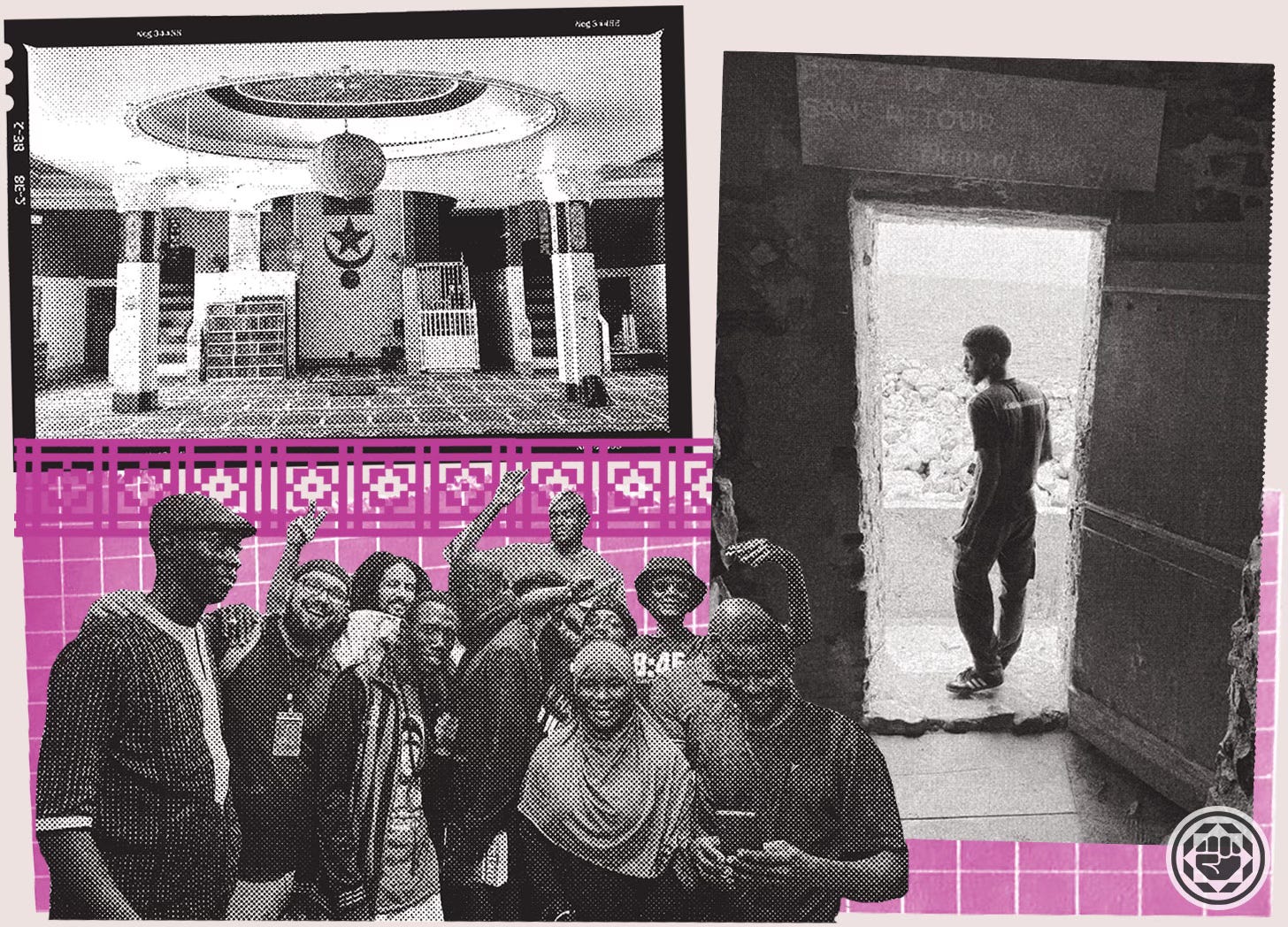
I would have never thought a once-in-a-lifetime trip to Senegal would have such a big impact on me emotionally and mentally. The trip to Africa evolved my worldview politically and allowed me to begin seeing the beauty of Black African people’s resilience in a newfound light, giving me one of the greatest experiences of my life. I didn’t know what to expect in the motherland. My only expectation was to enjoy the three-day Malcolm X panel on Islam and the Black radical tradition that we traveled for. My only worry was being held up by customs for being Black, Muslim, a documented gang member and a felon.
Once off the plane in Dakar after flying 19 hours from LAX, I walked through the airport security, showed my passport and got my bags. I looked through the crowd, seeing no other skin color but black, hearing languages I’ve never heard. In the taxi to our hotel on the Atlantic Ocean shore, I zoned out, rolling my window down to take in the smell, feel the air on my face and enjoy the activity of the city late at night.
As soon as my head hit the pillow, it seemed it was time to wake up. I couldn’t have imagined I would see so many Black people out and about in the streets early in the morning, especially the youth. We followed the crowd under a sign that said, “Paradise beach.” We walked up to a beach where hundreds of Black people were enjoying themselves, swimming in the water, selling fruits and refreshing drinks, wrestling, dancing and listening to music. Despite the joy all around us, I instantly started to feel anxious and alert. I began to feel like all eyes were on us. We were approached by two men, who we thought were trying to swindle us when they tried to sell us access to the VIP section on the beach. But we looked to our right and saw two tents set up with chairs and coolers sitting under the shade, with a sign that said “VIP Section.”
Once we walked away from the beach, I realized why I felt so anxious and alert around people who looked like me in Senegal. Coming from the United States, we have inherited racism against our own people, thinking that it was a problem with us being in that space on the beach or that something was about to happen due to a bunch of Black people being together. I realized I was the one who was mean mugging people. I was the one who was thinking bad thoughts about this new environment I was in. I was the one on major alert expecting for something bad to happen.
I had packed my Western ways of thinking and brought them with me to Senegal. I was robbing myself of an experience by being stuck in my mind.
Before the Malcolm X panel, one of my brothers, Khalid, and I went on a city walk. His favorite saying is, “You have to get on feet to really get to know the city.” We set out to go to the mosque and the African Renaissance Monument. We went to the Divinity Mosque in the middle of Dakar. The 40-minute ride along the coast of the Atlantic Ocean from our hotel was one of the most amazing views I have ever seen. We arrived at a beautiful white mosque with white marble outside. The mosque was in the middle of a village where locals were fishing and kids were playing with goats next to the water.
We went inside the mosque to pray, where we met the imam and learned the history of the Masjid. He is the third generation imam in his family to lead the mosque. He told us that his uncle once had a dream of a Masjid being built on top of water. Later, the community raised the funds to build it and the mosque came to life just as he had seen. His uncle passed away before the Masjid was completed, but the dream he shared became a reality. I had never heard a historical account like that before, only hearing about oral histories in books.
Later that day, we arrived at the Museum of Black Civilization in Dakar for the event, “In the Shadow of Malcolm X: Islam & the Black Radical Tradition.” As we pulled into the parking lot, I noticed outside the coliseum-like structure was art depicting Black African Americans who were victims of sanctioned state violence by the police. I saw Rodney King, Brianna Taylor, George Floyd, Philando Castile and Treyvon Martin. We all reflected on how powerful the message was, being sent all the way from Africa.
Nearly 100 people attended the 3-day panel inside the museum. There were former political prisoners of the Black panther party, scholars and sheikhs from countries from around the world to speak about Malcolm X. What blew me away was how revered, respected and studied Malcolm X’s ideology is around the world to this very day by both Muslims and non Muslims.
The panel helped me connect the dots on a few things. I always looked at the Black African American struggle as its own entity separate from the struggle of our African brothers and sisters in the African continent. But I finally realized what Pan-Africanism actually meant: bridging the gap of the struggles not only between Black people in the Americas and Africa, but all Black people around the world. It blew my mind learning how central the past and current struggles of the Black African American in America is and how respected we are for our resilience and the role we have played over the last few hundred years fighting against American colonialism and white supremacy.
The hospitality we felt from everyone we came across in Dakar was amazing. I met one brother named Badji, who was married to an African American woman for over a decade from Detroit who he met while she was visiting Senegal. He said they connected over conversations about Pan-Africanism and the struggle of our people around the world. He also did organizing work with youth in Senegal, helping poor youth to access education and work. Speaking to Badji spurred my “aha moment” in understanding the work and organizing we do around social justice matters in our communities. He helped connect the dots in similarities about who oppression comes from and what needs to be done. It made me realize that many people — African, Middle Eastern, Asian — around the world are fighting the same battles and these battles are linked together.
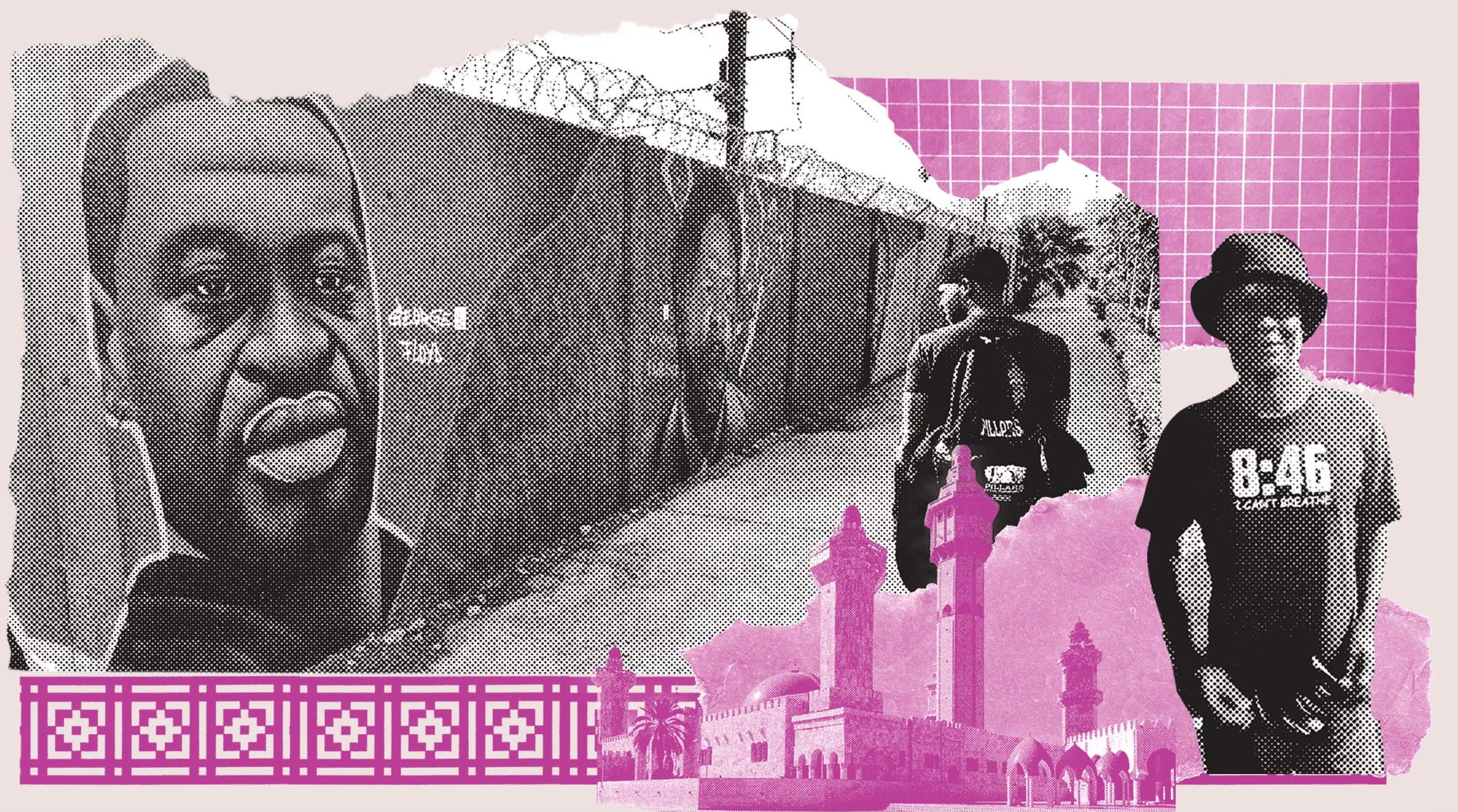
We took a spiritual retreat with a group of brothers and sisters from the panel to Medina Baye in the city of Kaolack, Senegal. The city was built by Sheikh Ibrahim Niass for the sole purpose of the worship of Allah. The city is centered around the Grand Mosque and the majority of its inhabitants practice the Tijani Sufi Order in Islam. The seven-hour ride to Medina Baye from Dakar was the most extraordinary ride I’ve ever been on. The bus rode through the jungles of Africa, where I saw people living in huts, kids going to school and people raising goats, playing soccer and selling fruit. I even saw a tree that looked just like the Tree of Life from the Lion King. It was humbling being able to see a world I could have never imagined or dreamed of.
The road in Medina Baye was sand, with houses made of concrete bricks. The people there had a spiritual way about themselves, dressing differently than those who live in the cities with their lives revolving around the prayer schedules of the Grand Mosque. There we lived amongst the people for three days — meeting the imam who is the leader of the community, praying at the Masjid everyday, practicing their dhikrs and getting to know the community.
Before we left, we went to visit Gory Island off the coast of Dakar where millions of African slaves were kept in cells smaller than a restroom before being shipped to the Americas for the Transatlantic slave trade. Being on the island where my ancestors were kidnapped, murdered and trafficked that is now a tourist attraction for foreign visitors had me in a state of anger. As I saw “The Door of No Return,” where our ancestors stepped out before they were forced onto the ship, I saw more white-skinned tourists than Black people. One white woman even had cornrow braids in her hair. “Why would they be here visiting this island?” I asked myself. Is it to really have empathy for those that it happened to? Or is it some lost history that they still yearn for?
At the end of my trip to Senegal, I realized the paradox we all live with. For the majority of the Senegalese people I met, I was the first Black African American they had ever met.
I realized I yearned for what my Senegalese brothers and sisters have as Black Africans experiencing the American experience. Black people in the United States yearn for a connection to our authentic culture, traditions and community. Speaking with brothers and sisters in Senegal, they yearned for what we Blacks seemed to have in the United States. We can go to school, make money and have things — in other words the “American Dream.” I told them it was more like the American NIGHTMARE.
We are enslaved to our materialistic things. We have to work eight hours a day as slaves to our rent, vehicle and phone bills. In America, we have the illusion of a great society with poverty hidden under the beauty. We have everything we want, but we have to slave and work day and night to keep our materialistic things, pay taxes and bills. Capitalism breeds an individualistic society where people are always competing with each other. In Senegal, everyday they work to survive for a meal on their families’ tables. Capitalism breeds abject poverty with no illusions, but the people are not individualistic. You see community in people taking care of others, because they all see they have a common enemy, a barrier to get over which is capitalism.
When I returned, it felt like Ramadan. I was rejuvenated for 24 hours. Though everything seems better out here – cars, nice buildings and houses – it’s dressed in straight evil. Because we’re all struggling under the surface. Coming back made me realize this is bigger than me. Knowing that people are doing organizing work all over Africa in some way, shape or form tells me our struggles aren’t all separate, that the battles here and around the world are actually linked together.