

Darryl Dunsmore suffers from a form of early onset arthritis, requiring assistive writing and eating devices. Some days, he can move around. Other days, his condition flares up to the point of paralysis, requiring a wheelchair or cane. When he was booked at a San Diego County jail in 2018, his devices were confiscated because jail staff had seen a video of Dunsmore walking unassisted.
With his devices taken away, Dunsmore reported feeling suicidal. Jail staff stripped him naked and put him in Enhanced Observation Housing, a cruel form of isolation created in response to high jail suicide rates. But without a wheelchair or grab bars, it was nearly impossible to use the toilet and Dunsmore was forced to sleep among his own feces and trash, according to court documents.
What began as Dunsmore’s handwritten complaint has now become a class-action federal lawsuit against San Diego County, the San Diego Sheriff’s Office and three healthcare contractors. The lawsuit details rampant medical neglect, abuse and multiple violations of the Americans with Disabilities Act, according to the 14 plaintiffs who all were once or currently held in county jails. After 18 months of litigation, a federal judge ordered the Sheriff’s Office to comply with independent oversight and ADA standards. So far, they’ve announced the creation of an ADA unit to oversee renovations. The lawsuit’s seven other claims will proceed in court.
The lawsuit was filed days after a 2022 California State Auditors Report found “multiple instances of individuals who requested or required medical and mental health care and did not receive it at all or in a timely manner” and warned that “the weaknesses in [the sheriff’s] policies and practices will continue to jeopardize the health and lives of the individuals in its custody.”
Neglecting the medical needs of prisoners is not a flaw but a matter of policy, confirming what many of us know about the carceral system – the cruelty is the point. Custody and medical staff are not only negligent of people’s medical and mental health needs, but often outright hostile to the survival of people in their care.
In 2023, Keith Bach died from preventable complications related to Type 1 diabetes after being booked just 5 days prior, according to Dr. Jeffrey Keller’s testimony. The Sheriff’s Office was so negligent that the coroner ruled his death a homicide.
His death “occurred despite medical records containing documentation of his medical condition, insulin requirements, when his pump would be depleted of insulin and multiple unanswered requests for insulin by Mr. Bach and fellow inmates,” according to the coroner’s report. Bach is just one of 80 people who have died in San Diego’s jails since the Dunsmore lawsuit first went to court in 2022.
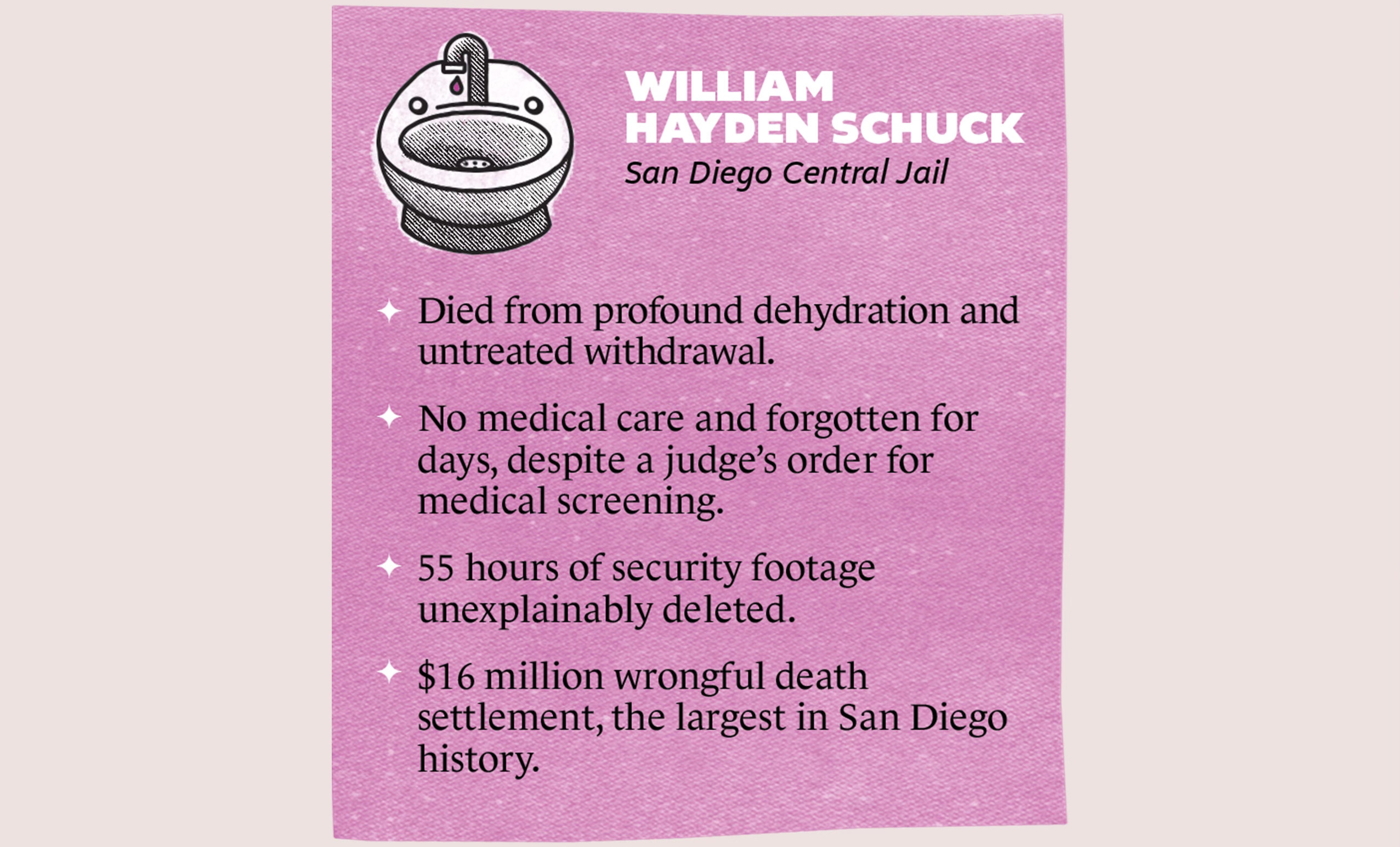
Gerardo Cruz-Sanchez died of pneumonia while held at Otay Mesa Detention Center in 2016. He was unable to eat without vomiting for a week. When he spit up blood on a cafeteria table, officers yelled at him, according to recorded phone calls from his cellmate. Only after he had coughed up enough blood to soak his bedsheets, was he taken to a hospital.
CoreCivic, the private prison company that contracts with Immigration and Customs Enforcement to run the Otay Mesa Detention Center, receives over 100 legal complaints nationally per year. They’ve been accused of medical neglect in San Diego as far back as 2005, when Ignacio Sarabia Villaseñor died from a heart attack. After he collapsed, CoreCivic guards stood over him for at least 25 minutes before starting resuscitation.
A Human Rights Watch analysis of deaths occurring between 2015 and 2017 at the detention center showed that all but one had “evidence of subpar and dangerous practices including unreasonable delays, poor practitioner and nursing care, and botched emergency response.” ICE even releases people shortly before their deaths to keep their death rates low and often conceals or destroys records, according to reports by the ACLU and American Immigration Council, respectively.
Since that study, ICE has officially reported four more deaths at the detention center. Otay Mesa Detention Center now ranks fifth in the country for the amount of people held in immigrant detention.
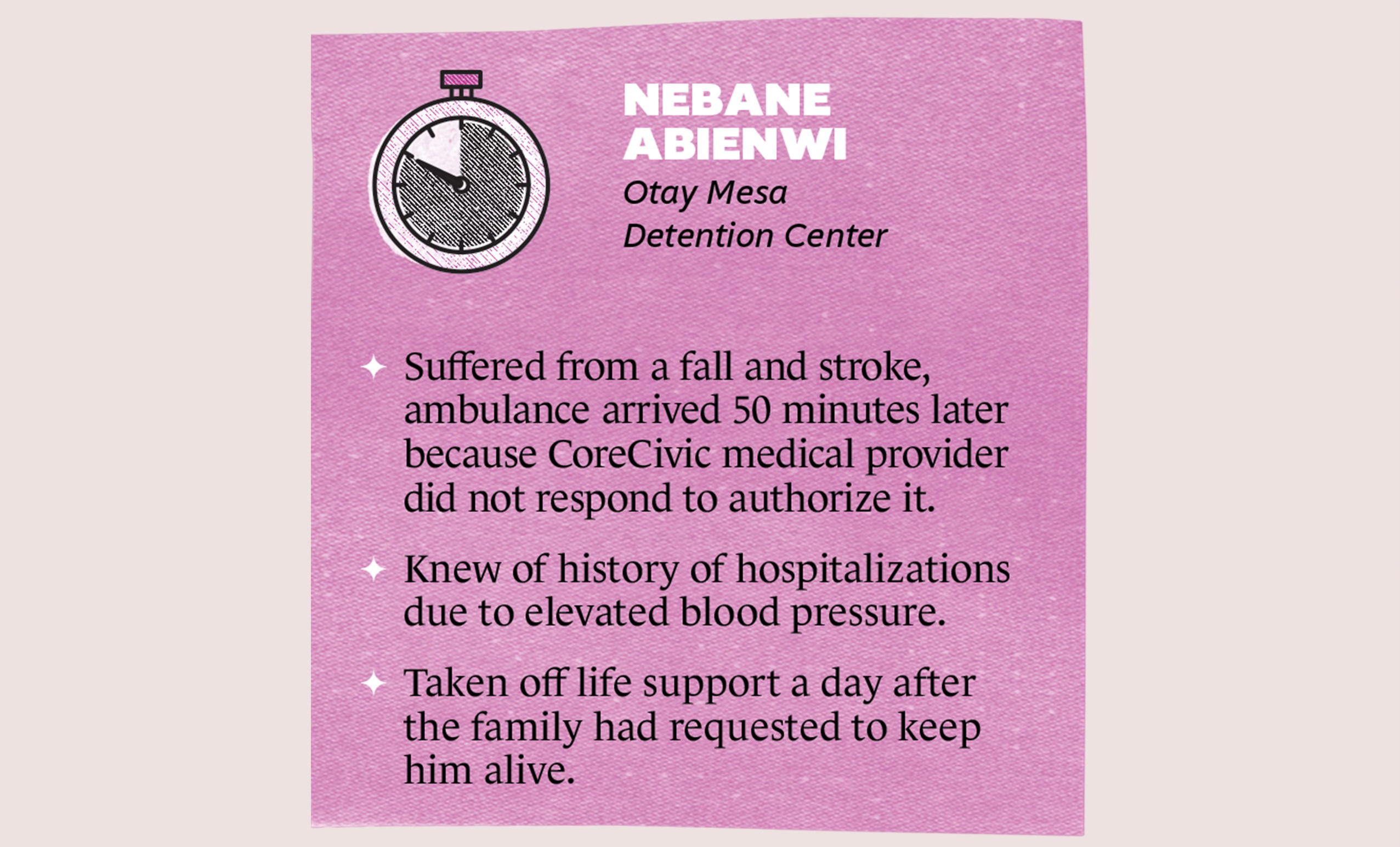
Even more dangerous are the policies of retaliation against prisoners who call attention to their abuse, and the use of solitary confinement as a punishment for requesting medical care.
Several women at the immigrant detention center submitted sworn declarations about the dangerous conditions during the initial COVID outbreak in May 2020. CoreCivic staff put one of them in “medical isolation” for two weeks, while specifically mentioning the lawsuit, according to an ACLU report.
The Sheriff’s Office created their Enhanced Observation Housing “program” in 2015 to address high jail suicide rates. People confined to these cells are forced to wear nothing but a smock and are deprived of their belongings, recreation, phone calls, family visits and showers. The cells are reported to be filthy, covered in urine and feces, and completely inappropriate for any human being, let alone someone in crisis. Deaths by suicide in San Diego jails continue to be among the highest in the state.
When Andree Andrade reported feeling suicidal, he was kept in one of these cells for almost 36 hours. For the first 12 hours, jail staff woke him up every 15 minutes.
“If you’re going to make us work, then I’m going to keep waking you up,” jail staff stated, according to court documents. When Andrade requested a confidential mental health visit, he was handcuffed and marched into a room with several deputies demanding he state whether he was suicidal. Given the choice between sleep deprivation in an observation cell or not reporting his condition, Andrade chose the latter.
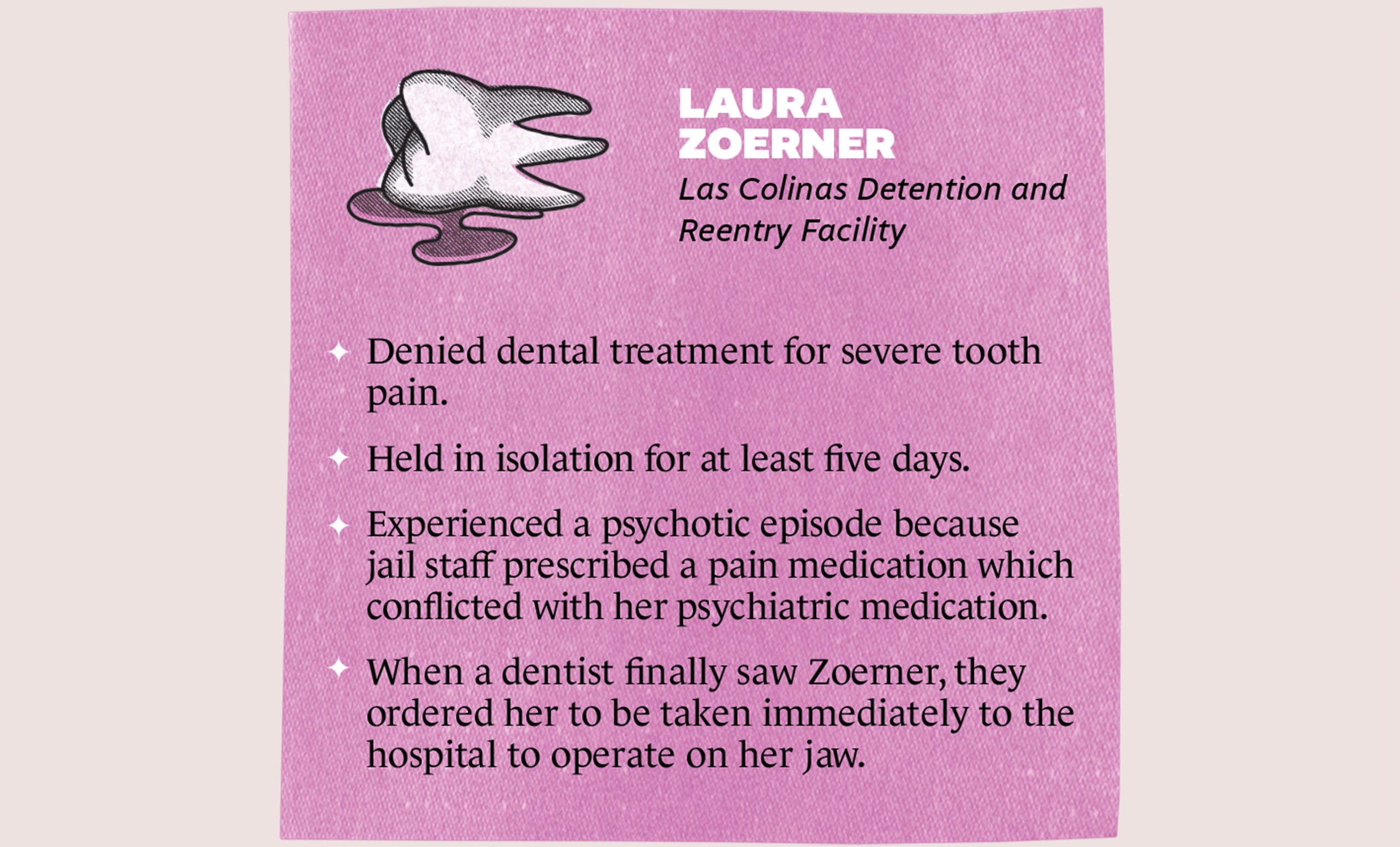
In September, the Board of Supervisors voted to expand the authority of the Citizens’ Law Enforcement Review Board to include health care workers in cases of in-custody deaths. Families organizing under Saving Lives in Custody California have pushed for this kind of oversight and accountability for their loved ones dying in San Diego jails since 2020.
“All the families that were impacted and that lost their lives have been the ones demanding that change, not because of [Sheriff Kelly Martinez’s] own efforts. And a lot of those changes came from lawsuits and the audit, so she doesn’t deserve a pat on the back,” said Yusef Miller, executive director of Saving Lives in Custody California and the North County Equity and Justice Coalition.
Carceral institutions have demonstrated a systemic pattern of medical negligence and abuse. No human being should be subjected to institutions that operate on cruelty as a policy.
Gay Grunfeld, lead attorney on the Dunsmore lawsuit, told All Rise, “The County is treating this [lawsuit] as though it’s just a fine.” She criticized the Sheriff’s treatment of people in their care. “Secluding people in solitary confinement for 23 hours a day is resulting in worsening mental illness and avoidable death…They need to reduce the population as much as they can.” Grunfeld recommends that prisoners suffering from medical neglect file a grievance as soon as they feel their medical needs aren’t being met.
CoreCivic is set to receive an additional $300 million from new ICE contracts. The Sheriff’s Office persuaded the County to spend $26.5 million on Central jail improvements earlier this year. Meanwhile people continue to suffer and die while incarcerated.
“As we say in Saving Lives in Custody California, the walls and the windows and the old bars did not kill our loved ones. Lack of programs did. Lack of compassion did. Lack of accountability killed them,” said Miller. “So you can’t buy your way out of those.”
Nothing is more effective than divesting from carceral systems and investing in healthcare, housing, and substance use programs. Yet the state rushes to build and repurpose more cages for our communities – Black and brown people, migrants, the poor and unhoused. They never meant for abuses to end in prisons. They simply want the infrastructure to abuse more of us.