

Gov. Gavin Newsom signed the Racial Justice Act (RJA) into law in September 2020 following the massive protests and call for racial justice across the country after the police murder of George Floyd.
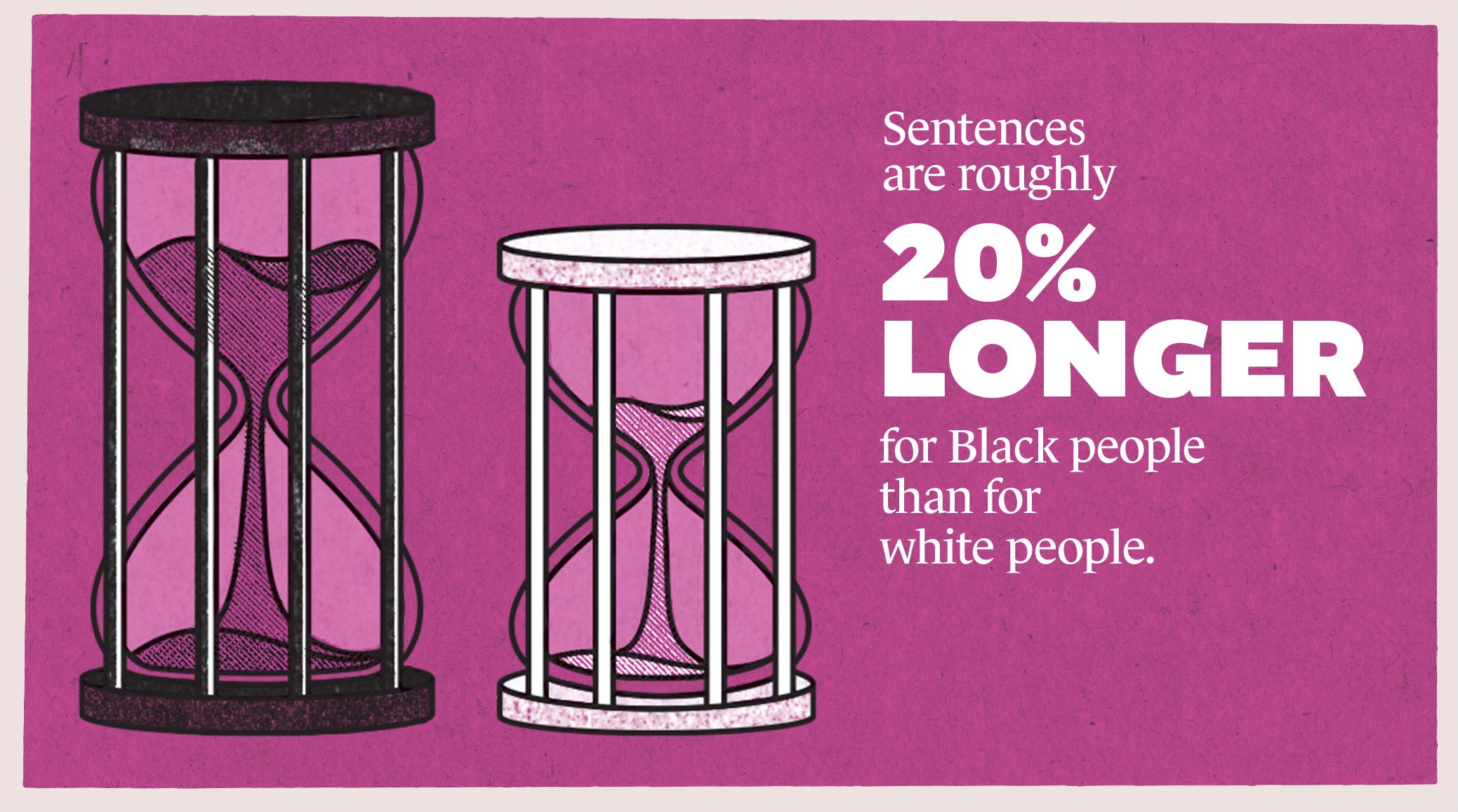
According to one recent report, Black men make up six percent of the state’s adult population but 28 percent of incarcerated men. Courts regularly sentence Black people to prison terms roughly 20 percent longer than white people.
Californians could only explicitly hold the system accountable for racial bias through a civil rights lawsuit before the RJA. Challenging criminal convictions or sentences as racially discriminatory is very difficult, due in part to a nearly-impossible standard set in 1987 by the U.S. Supreme Court in McCleskey v. Kemp. That decision established that a defendant must “prove that the decisionmakers in his case acted with discriminatory purpose” and cannot rely solely on statistical studies showing discrimination broadly — a standard people rarely had success in meeting.
However, the effectiveness of the RJA in challenging charges, convictions and sentences in practice has come into question, even after the state expanded the time frame allowed to challenge their convictions.
The law has been plagued by a lack of resources, access to data and continued bias in the criminal legal system. The state does not keep data on RJA cases, but a review by The Garrison Project and CalMatters last year found that defendants in only about a dozen cases had been successful by speaking with attorneys, legal experts and advocates across the state.
All Rise spoke with Jane Brown, a public defender from Alameda County who leads their RJA cases and trains other public defenders around the state on the law to talk about the challenges she’s faced in upholding the spirit of the law.
This interview has been lightly edited for clarity and length.
Can you start by telling me a little about your role with the public defenders office and how that involves RJA cases?
I’ve been at my office for about 20 years and I work racial justice issues within the office. I conducted one of the first trainings on RJA and have been training up and down the state since then. I’ve been the RJA person in my office since it came into play. I started up an RJA unit and head that unit. Unfortunately one of the challenges is simply resources, so that unit is just myself.
How many RJA appeals have you filed since the legislation went into effect?
RJA litigation, especially post-conviction matters, tends to be time and labor intensive — this taps into the resource issues that everyone is battling. If there’s a case from 1995 that went to trial, that’s thousands of pages of transcripts.
I jump in to support pre-conviction work, where someone is in trial and something happens in the middle of that trial. For post-conviction, we have a set of 30 to 50 cases, where things have not been filed yet, but we are working on all those pieces.
What have been some of the challenges that you’ve noticed with the implementation of RJA since it went into effect?
The resource issue just broadly. This post-conviction work particularly is intensive when it comes to resources. You have to review a whole trial transcript — a murder trial that took weeks. And the devil is in the details. You have to understand the context of statements, the theme of a case and how people argued it. Just diving into that is a lot of work. It would be nice if the state figured out a way to resource this a little bit better.
Some of the other challenges are just conceptual for people. I think this is an issue especially for judges and [district attorneys], but frankly everyone. Intellectually people understand on a broad level maybe that the criminal legal system has produced disparate outcomes, but I think the challenge is there is a lot of debate as to why that is. It’s particularly difficult for career prosecutors and judges because it, on some level, requires them to almost invalidate the decisions they’ve made over time.
There’s a resistance to that. It’s ironic because that resistance in and of itself, in my opinion, is often implicit bias. If I have a case where the prosecutor overcharged it and it’s a Black man, maybe it’s something where the higher instance of the DA charging among Black individuals and there are some defense issues, and I bring an RJA motion, the prosecutors have a really hard time considering that perhaps this man may even not be guilty. They have this little bit of evidence and maybe we’ve developed new evidence and they can’t even hear this evidence.
That’s what happens every day in courts around the country. But with RJA, it’s very hard for players in the system to take a step back and be willing to challenge at every level their perspectives.
Another challenge is the prosecutors office fighting us on getting the data. If you, as a prosecutor, believed in helping the public’s confidence in the system and making sure people are treated fairly in the system, to me you would just give us the data.
There have been a few cases out in the past three to six months that have been published which really fly in the face of the RJA and undermine the spirit of the RJA. One of the cases discusses the idea that when you’re challenging whether someone has been convicted or sentenced with a harsher offense, that gang enhancements don’t count. It goes against everything the RJA stands for.
What are some potential solutions to these challenges?
One major progress step would be the DA and the judges getting on board with the idea that transparency is what the statute is asking for. On the front end, we should all be able to have a conversation and there’s litigation that has to be had.
This law is taking awhile to gain its legs because every judge and every DA doesn’t necessarily encounter it. I know there are judges and DAs even in my county who have some vague understanding that it exists, but haven’t dealt with it in depth.
Everyone in the criminal legal system has to rip the bandaid off and be willing and able to speak about issues around race and ethnicity. There’s this dynamic that happens a lot the minute you bring up race in the courtroom.
Even if you have a prosecutor or judge who maybe for years had secretly thought there were issues, now we have this law and this law allows all of us to give voice to the things we’re seeing. One of the solutions is that everyone needs to be willing to speak openly and candidly about race in the courtroom and the criminal legal system.
Obviously most of us start at the place that there should be implicit bias training. I do think that’s important and I agree with that. Experience is often the best teacher. Obviously I can’t have everyone have the experience of my clients or myself as a Black woman, but there are ways in which you can simulate and show implicit bias. There are ways to maybe make it more real to people, rather than just saying “implicit bias impacts us all.” The more training we can do that it’s a cognitive progress we are unaware of most times is important because that’s a point that gets lost often when we’re litigating these motions.
One other challenge is that the RJA is unique in that it requires outsourcing to experts. The experts are people who have their own fulltime jobs that are not about doing things like reviewing transcripts and data and testifying. A lot of these folks are amazing, but they are academics, economists, statisticians at universities, so it would be amazing to have some sort of consortium of experts.
The other piece is police officers. They are a big part of RJA, but in the climate we’re in, racial profiling has almost been baked into the idea of police investigations. That’s what I’m seeing more and more, so how do we figure out some way of training or consequences?
What advice do you have for people impacted by racial disparities in the criminal legal system who think they have an RJA claim?
Don’t be afraid to raise the issue with your current or past attorney that you believe there was bias involved.
People who have been impacted by the system often feel ill-equipped to challenge the system and to challenge their own attorneys. I would like to encourage that. If you see or feel anything, follow your instinct to at least inquire.
Your attorney has a duty to investigate RJA claims. If your attorney doesn’t understand at the moment, they have a duty to at least think about it.
Families should look for local community organizations and resources to help with at least basic information about where to go from there.
If [you] are able to have an attorney and are trying to litigate an RJA, to try to have some patience. Because even in a perfect world, it’s not a fast process.